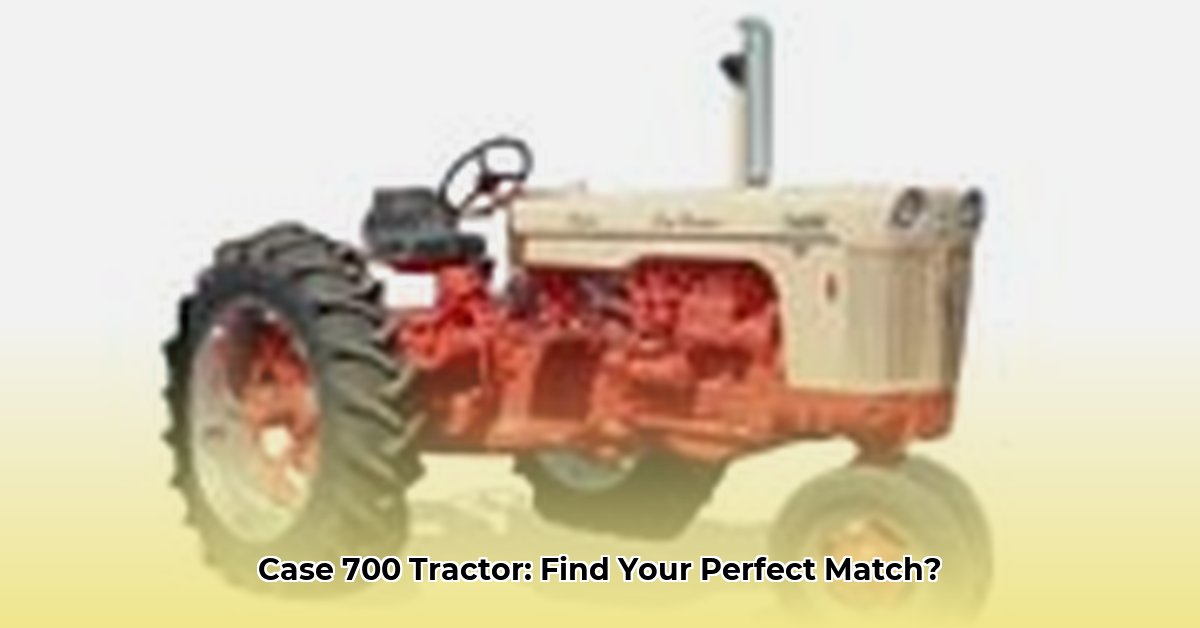
Finding a classic J.I. Case 700 tractor can feel like a treasure hunt. This guide helps you navigate the search, understand its value, and even tackle restoration. We'll cover everything from model variations to maintenance challenges, empowering you to own this piece of agricultural history. For even more Case 700 information, check out this helpful resource: Case 700 Info.
Case 700 Tractor: History, Market Analysis, and Ownership
The Case 700 series, while not a single model but a range within the broader 7xxB line, holds a special place among vintage farm equipment enthusiasts. Available in both gasoline and diesel versions, these tractors offered farmers a reliable workhorse. While precise production numbers remain elusive, their consistent presence at auctions indicates strong collector interest. A key feature, the Dual-Range eight-speed transmission, distinguishes them from the Case 800 series and often impacts value.
Understanding the Case 700 Market
Online auction results, primarily from the Midwest, show consistent Case 700 sales, proving steady collector demand. However, precise pricing is difficult due to incomplete sales data. Rarity significantly influences price; specialized models (orchard, high-crop) command premiums due to their unique features and likely lower production numbers. A tractor's condition is paramount; a restored model will fetch substantially more than one needing significant repairs. This makes careful inspection crucial.
Finding Your Case 700: A Practical Buyer's Guide
Finding your dream Case 700 requires dedication. Here's a structured approach:
Online Auction Sites: Regularly browse established online auction platforms. Note that listed prices are starting points; final prices depend on the actual condition.
Local Listings: Explore local farm equipment dealers, newspapers, and classified ads. Networking within farming communities can yield undiscovered listings.
Collector Networks: Join online forums and vintage tractor collector groups. These communities often offer early access to available tractors.
Pre-Purchase Inspection: Never buy a tractor sight unseen. Schedule a thorough inspection, including checking the engine compression, hydraulics, and transmission. Consider hiring a classic tractor mechanic for a more exhaustive assessment.
Budgeting for Restoration: Restoration can be costly. Account for repairs, parts sourcing (which can be challenging), and unexpected expenses.
Case 700 Value Factors: What to Look For
While the tractor's advertised 46 drawbar horsepower and 51 PTO horsepower provide a baseline, several factors heavily influence its value:
Condition: Excellent condition greatly increases value. Minor wear is expected, but major damage dramatically reduces it.
Completeness: Original, unrestored parts are highly valued. Missing components significantly lower its appeal.
Rarity: Specialized models or uncommon configurations command higher prices.
Documentation: Original manuals and service records add value, confirming authenticity and history.
Owning a Case 700: Challenges and Rewards
Owning a Case 700 is fulfilling but demanding. Parts availability is a key challenge; sourcing parts may require patience and networking. Restoration costs can quickly escalate. Prioritize essential repairs and budget accordingly. Joining online forums provides access to invaluable expertise and support.
Resources and Further Research: Continuing the Legacy
Let's delve deeper into your research journey:
Online Forums: Connect with experienced Case 700 owners on dedicated forums. (e.g., New Ag Talk).
Parts Suppliers: Identify specialized dealers and salvage yards for sourcing parts. Network with others to avoid future sourcing difficulties.
Agricultural History Societies: Consult archives for detailed production information and rare model documentation.
The search for a Case 700 tractor combines research, planning, and a realistic appraisal of the ownership commitment. With careful planning, you can own a compelling piece of agricultural history. Good luck!